

گواهی آزمون کارخانه (MTC)؛ ساختار، انطباق و قابلیت ردیابی

از شماره ذوب تا ردیابی محصول به‌روزرسانی: ۲۰۲۶

گواهی آزمون کارخانه (Mill Test CertificateMTC) یا گزارش آزمون مواد (Material Test ReportMTR) مدرکی است که اطلاعات شناسایی محصول و نتایج آزمون‌های اعلام‌شده توسط سازنده را ارائه می‌کند. این گواهی زمانی قابل اتکاست که اطلاعات آن با سفارش خرید، استاندارد محصول، علائم شناسایی و محصول تحویلی تطبیق داده شوند و ردیابی آن‌ها امکان‌پذیر باشد.

تعریف و محدودیت

گواهی آزمون کارخانه (MTC)، مدرک ردیابی و انطباق است

وجود نام استاندارد و چند نتیجه آزمون در یک فایل، به‌تنهایی برای تأیید محصول کافی نیست. گواهی باید محصول مشخصی را از طریق شماره ذوب، شماره دسته تولید (Batch Number) یا شناسه قابل ردیابی به نتایج شیمیایی، مکانیکی و آزمون‌های مربوط متصل کند.

هویت محصولسازنده، استاندارد، گرید، روش ساخت، ابعاد، مقدار و شرایط تحویل را مشخص می‌کند.
ردیابیشماره ذوب (Heat Number)، شماره دسته تولید، شماره لوله یا سایر شناسه‌ها را به محصول تحویلی متصل می‌کند.
نتایج آزمونترکیب شیمیایی، خواص مکانیکی و آزمون‌های مشخص‌شده در استاندارد یا سفارش را گزارش می‌کند.
تأیید مدارک فنینوع مدرک، نام و سمت امضاکننده و حدود تأیید را مشخص می‌کند.
EN 10204

انواع رایج مدارک بازرسی چه تفاوتی دارند؟

نسخه قابل دانلودMANIK TRADING
دانلود جدول
نوع مدرکمبنای نتایجتأییدکنندهکاربرد و محدودیت
Type 2.1بدون ارائه نتایج آزمونسازندهاعلام انطباق با سفارش؛ برای کنترل خواص واقعی کافی نیست
Type 2.2نتایج آزمون‌های غیرمختص به محصول تحویلیسازندهنتایج الزاماً متعلق به همان محصول یا بچ تحویلی نیستند
Type 3.1نتایج آزمون‌های مختص محصول تحویلینماینده مجاز بازرسی سازنده، مستقل از بخش تولیدمناسب برای کاربردهای صنعتی نیازمند ردیابی و نتایج آزمون مختص محصول
Type 3.2نتایج آزمون‌های مختص محصول تحویلینماینده سازنده و نماینده خریدار یا بازرس مستقل تعیین‌شدهدارای تأیید مستقل افزوده؛ دامنه حضور و نظارت بر آزمون‌ها باید از ابتدا تعریف شود
نکته قراردادی: عبارت‌هایی مانند «مطابق نوع 3.2» یا «در حد نوع 3.2» معادل گواهی واقعی نوع 3.2 نیستند. دامنه بازرسی، حضور بازرس و نحوه تأیید باید پیش از تولید یا انجام آزمون‌ها توافق شوند.
کنترل محتوا

اطلاعات و نتایج اصلی در گواهی آزمون کارخانه (MTC)

یک MTC قابل اتکا باید امکان تطبیق محصول تحویلی با استاندارد، گرید، شماره ذوب، نتایج شیمیایی و مکانیکی، عملیات حرارتی و آزمون‌های انجام‌شده را فراهم کند.

شماره استاندارد و ویرایششماره و عنوان استاندارد (Designation)، سال یا ویرایش، گرید و الزامات تکمیلی باید با سفارش خرید مطابقت داشته باشند.
شرح و ابعاد محصولنوع محصول، روش ساخت، قطر خارجی، ضخامت، طول و مقدار باید با کالای تحویلی تطبیق داشته باشند.
شماره ذوب و ردیابیشناسه روی گواهی باید روی مارکینگ لوله، برچسب بسته‌بندی یا مدارک انتقال قابل پیگیری باشد.
ترکیب شیمیایینتایج عناصر با حدود گرید و نوع آنالیز اعلام‌شده، مانند آنالیز ذوب یا محصول، مقایسه شوند.
خواص مکانیکیاستحکام کششی، تنش تسلیم، ازدیاد طول، سختی و در صورت الزام نتایج آزمون ضربه باید بررسی شوند.
عملیات حرارتی و آزمون‌هاوضعیت عملیات حرارتی، نتیجه آزمون هیدرواستاتیک، آزمون‌های غیرمخرب و سایر آزمون‌های تکمیلی باید در گواهی ثبت شده باشند.
روش کنترل

ساختار کنترل و تطبیق MTC

کنترل MTC یعنی بررسی هم‌زمان انطباق گواهی با مشخصات فنی و قابلیت ردیابی آن تا محصول. نتایج آزمون تنها زمانی معنا دارند که محدوده، معیار پذیرش و هویت متریال روشن باشد.

انطباق گواهی با مشخصات فنی و قراردادیاستاندارد، گرید، روش ساخت، ابعاد، مقدار، شرایط تحویل و نوع مدرک باید منطبق باشند.
محدوده نتایجنتایج باید به همان ذوب، بچ، لوله یا گروه آزمون قابل انتساب باشند و واحدها و روش آزمون نیز روشن باشند.
انطباق نتایج با حدود پذیرشصرف وجود یک عدد کافی نیست؛ حداقل، حداکثر، دمای آزمون، جهت نمونه و سایر شرایط پذیرش بخشی از تفسیر نتیجه‌اند.
ردیابی فیزیکی محصولشماره ذوب و سایر شناسه‌ها باید میان مارکینگ، برچسب بسته‌بندی، لیست بسته‌بندی و محصول تحویلی سازگار باشند.
امضا و مرجع صدورنام سازنده، نماینده مجاز، بازرس مستقل و حدود مسئولیت هر امضا باید قابل تشخیص باشند.
نمونه آموزشی تأییدشده

نمونه PDF گواهی آزمون کارخانه نوع 3.1

این فایل نمونه‌ای برای نمایش ساختار یک گواهی آزمون کارخانه است. تمام نام‌ها، شماره‌ها و نتایج درج‌شده در نمونه ساختگی‌اند و این نمونه برای استفاده تجاری، تأیید محصول یا جایگزینی گواهی صادرشده توسط کارخانه معتبر نیست.

در ارزیابی یک MTC، تطابق شماره ذوب، مشخصات محصول، استاندارد و گرید، حدود پذیرش، نتایج شیمیایی و مکانیکی، ردیابی و بخش تأییدکننده گواهی عناصر اصلی کنترل هستند.
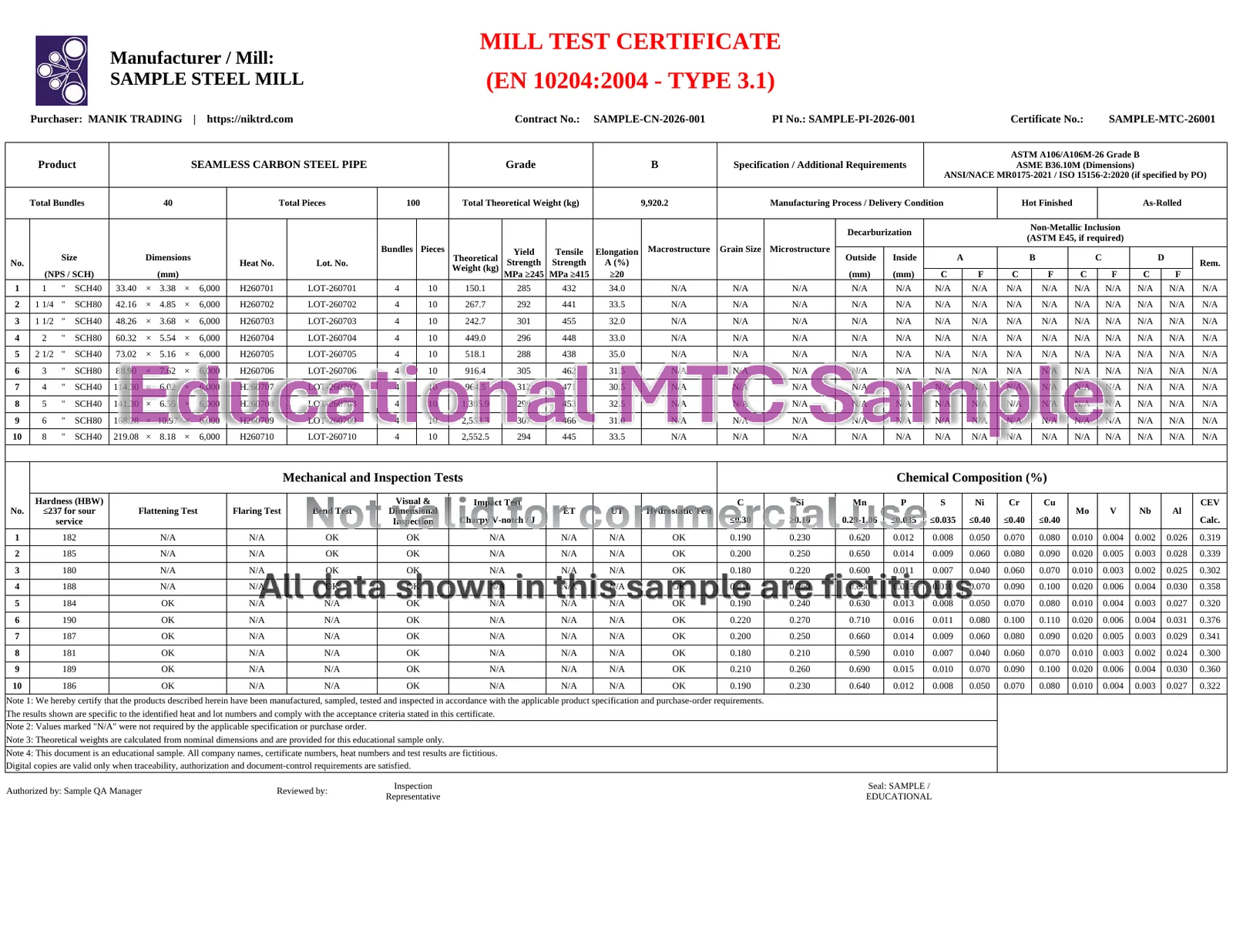
پیش‌نمایش نمونه آموزشی گواهی آزمون کارخانه EN 10204 Type 3.1
Educational MTC Sample - Not valid for commercial use
نشانه‌های خطر

چه مواردی نیازمند بررسی بیشتر هستند؟

برخی نشانه‌ها در MTC یا مدارک همراه می‌توانند نیاز به بررسی تکمیلی داشته باشند. ناسازگاری اطلاعات، ردیابی ناقص یا نتایجی که با دامنه استاندارد هم‌خوان نیستند باید پیش از پذیرش فنی روشن شوند.

عدم تطابق شماره ذوب

شماره ذوب گواهی با مارکینگ یا تگ محصول همخوان نیست یا زنجیره انتقال آن مستند نشده است.

نتایج تکراری یا غیرطبیعی

اعداد یکسان برای ذوب‌های متعدد، قالب‌بندی ناسازگار یا نتایج بدون واحد می‌تواند نیازمند تأیید مستقیم باشد.

اصلاحات بدون کنترل

حذف، اضافه‌کردن یا تغییر داده بدون امضا، مهر، شماره بازنگری یا توضیح رسمی قابل قبول نیست.

گواهی بازصادرشده یا رونویسی‌شده توسط واسطه

رونویسی یا انتقال گواهی باید ردیابی گواهی اصلی را حفظ کند و نباید دامنه تأیید را بیش از گواهی مبنا نشان دهد.

پرسش‌های کلیدی

سؤالات متداول

آیا گواهی آزمون کارخانه (MTC) به‌تنهایی اصالت محصول را ثابت می‌کند؟

خیر. اطلاعات گواهی باید با مارکینگ، شماره ذوب، ابعاد، تعداد، مشخصات سفارش و در صورت لزوم مدارک بازرسی و زنجیره تأمین تطبیق داده شوند.

تفاوت گواهی نوع 3.1 و نوع 3.2 چیست؟

هر دو بر نتایج بازرسی و آزمون مشخص محصول تکیه دارند؛ در گواهی نوع 3.2، علاوه بر نماینده مجاز سازنده، تأیید مستقل خریدار یا بازرس تعیین‌شده نیز وجود دارد.

آیا گزارش آزمایشگاه مستقل همان گواهی آزمون کارخانه نوع 3.2 است؟

خیر. گزارش آزمایشگاه فقط نتایج آزمون را ارائه می‌کند و به‌تنهایی جایگزین ساختار صدور و تأیید گواهی نوع 3.2 نمی‌شود.

منابع فنی

ویرایش‌ها و صفحات رسمی بررسی‌شده

شماره و سال انتشار استاندارد، دامنه کاربرد و الزامات تکمیلی باید با منبع رسمی، مشخصات فنی پروژه و الزامات قرارداد تطبیق داده شوند.

Mill Test Certificate (MTC): Structure, Conformity and Traceability
From heat number to product traceability Updated: 2026

A mill test certificate (MTC), also called a material test report (MTR), provides product identification and the test results declared by the manufacturer. Its value depends on whether the document can be traced to the purchase order, governing product specification, product marking and delivered material.

Purpose and limit

An MTC is a conformity and traceability record, not decoration

A standard number and a few test values on a file are not enough. The certificate should connect a defined product, heat, batch or traceable unit to the applicable chemistry, mechanical properties and required examinations.

Product identityIdentifies manufacturer, specification, grade, manufacture, dimensions, quantity and delivery condition.
TraceabilityConnects heat number, batch, pipe number or other identifiers to the delivered material.
Test resultsReports chemistry, mechanical properties and examinations required by the standard or order.
Document validationIdentifies the document type, signatory and scope of validation.
EN 10204

How do common inspection document types differ?

DownloadableMANIK TRADING
Download table
Document typeBasis of resultsValidationUse and limitation
Type 2.1No test results suppliedManufacturerDeclaration of order conformity; insufficient for checking actual properties
Type 2.2Results from non-specific inspectionManufacturerResults are not necessarily from the delivered product or batch
Type 3.1Results from specific inspectionManufacturer's authorized inspection representative independent of productionCommon where traceability and product-specific results are required
Type 3.2Results from specific inspectionManufacturer representative plus purchaser representative or designated independent inspectorAdditional independent validation; attendance and witnessing scope must be defined in advance
Contract note: “in accordance with the intent of 3.2” is not the same as a true Type 3.2 certificate. Inspection scope, inspector attendance and validation route should be agreed before manufacture or testing.
Content review

Principal information and results in an MTC

A useful MTC should connect the delivered product to its standard, grade, heat number, chemistry, mechanical results, heat treatment and specified tests.

Standard and editionDesignation, edition, grade and supplementary requirements should match the purchase order.
Product description and dimensionsProduct form, manufacturing route, OD, wall, length and quantity should match the delivered material.
Heat number and traceabilityThe certificate identifier should be traceable to pipe marking, bundle tag or transfer records.
Chemical compositionElement results should be checked against grade limits and the stated analysis type.
Mechanical propertiesTensile strength, yield, elongation, hardness and impact testing are the principal reported mechanical results when applicable.
Heat treatment and examinationsHeat-treatment condition, hydrostatic test, NDT and supplementary testing records form the process and inspection record.
Test method and reporting basis

Structure of MTC verification

MTC review combines document compliance with physical traceability. Test values are meaningful only when their scope, acceptance criteria and material identity are clear.

Conformity of the certificate with technical and contractual requirementsSpecification, grade, manufacture, dimensions, quantity, delivery condition and document type should match.
Establish the result scopeResults must be attributable to the same heat, batch, pipe or test unit, with units and test methods clearly identified.
Conformity of results with acceptance limitsA reported number is meaningful only with its minimum/maximum criterion, test temperature, sample orientation and other acceptance conditions.
Physical product traceabilityHeat number and other identifiers must remain consistent across marking, bundle tags, packing list and delivered product.
signatures and issuing authorityThe manufacturer, authorized representative, independent inspector and the scope of each validation should be identifiable.
Approved educational sample

Type 3.1 Mill Test Certificate PDF sample

This document is provided as a sample of mill test certificate structure. Every name, identifier and result shown in the sample is fictitious. It is not valid for commercial use, product acceptance or as a substitute for a certificate issued by the manufacturer.

When reviewing the sample, focus on heat-number traceability, product description, specification and grade, acceptance limits, chemical and mechanical results, and the document authorization section.

Preview of the EN 10204 Type 3.1 educational mill test certificate sample
نمونه آموزشی MTC — فاقد اعتبار برای استفاده تجاری
Red flags

Which findings require further verification?

Some document features call for additional review. Inconsistent data, incomplete traceability or results outside the expected specification context should be resolved before technical acceptance.

Heat-number mismatch

The certificate heat does not match product marking or its transfer chain is undocumented.

Repeated or implausible results

Identical results across many heats, inconsistent formatting or values without units may require direct confirmation.

Uncontrolled alterations

Deleted, added or changed data without signature, stamp, revision number or formal explanation is unacceptable.

Transcribed certificate from an intermediary

A transferred certificate must preserve traceability to the original and must not overstate the scope of validation.

Key questions

Frequently asked questions

Does an MTC alone prove product authenticity?

No. Certificate data should be matched to marking, heat number, dimensions, quantity, order specification and, where necessary, inspection and supply-chain records.

What is the difference between Type 3.1 and Type 3.2?

Both use results from specific inspection. Type 3.2 adds independent validation by the purchaser's representative or a designated inspector in addition to the manufacturer's authorized representative.

Is an independent laboratory report the same as a Type 3.2 MTC?

No. A laboratory report provides test results but does not by itself satisfy the issuing and validation structure of a Type 3.2 certificate.

Technical sources

Official editions and pages checked

The cited edition, scope and supplementary requirements remain subject to the official source and governing project documents.